Rank Math vs. Yoast SEO in 2026: Which Is the Best Plugin for Small Businesses?


The Rank Math vs. Yoast SEO debate is one of the most searched questions in the WordPress world right now, and for good reason. You have set up your site, you are ready to start publishing, and you need to know which of these two plugins will actually help your business rank on Google.
The problem is that most comparisons you find online are outdated, vague, or written by people who already favor one side. This guide gives you a technically honest, up-to-date Rank Math vs Yoast SEO breakdown so you can make a confident decision today, without wasting time second-guessing yourself later.
Quick answer: For most small businesses in 2026, Rank Math offers more value. It includes more features in the free tier, delivers better SEO depth, and costs less overall. Yoast SEO is the better fit if you are a complete beginner or manage a non-technical team that needs simple, guided editing.
What each plugin actually does
Before diving into the full Rank Math vs. Yoast SEO comparison, it helps to understand what each plugin was built to do.
Both handle the WordPress SEO fundamentals: XML sitemaps, meta titles and descriptions, Open Graph tags for social sharing, and content readability scoring. That is where the similarities end.
Rank Math launched in 2018 with a clear goal: to make advanced SEO features available for free. It quickly became the plugin of choice for developers and growth-focused businesses who needed more control without paying for multiple add-ons.
Yoast SEO launched in 2010 and, for years, was the default recommendation for any new WordPress site. Its traffic-light scoring system made on-page SEO accessible to non-technical users, and that simplicity still sets it apart for beginners today.
Ease of use
Yoast SEO
Yoast’s in-editor panel is clean and intuitive. The red-orange-green scoring system gives instant visual feedback on your content. For editors who are not trained in SEO, this guided approach reduces mistakes and makes publishing feel manageable. Setup takes about five minutes.
Rank Math
Rank Math’s setup wizard takes a few more minutes. It connects to Google Search Console and configures schema markup automatically. The backend is module-based, so you activate only what you need: local SEO, redirections, and rich snippets. The learning curve is slightly steeper than Yoast, but most users find Rank Math intuitive within a week of regular use.
SEO capabilities: the real differentiator in Rank Math vs Yoast SEO
This is where the Rank Math vs. Yoast SEO gap becomes most visible and where your decision will likely be made.
Keyword optimisation
Yoast Free allows one focus keyword per post. Rank Math Free allows up to five. For content that naturally targets several related search terms, which is most small business content, this difference matters significantly.
Schema markup
Rank Math includes a fully visual schema builder in its free version. You can assign articles, products, FAQs, reviews, HowTos, and dozens of other schema types to any page. This directly affects whether your pages qualify for Google’s rich results. Yoast handles basic site-level schema automatically but gives you very little control over granular schema types without upgrading. For a deeper overview of how structured data affects rankings, see Google’s structured data documentation.
Google Search Console integration
Rank Math pulls GSC data, including keyword rankings, impressions, and click-through rates, directly into your WordPress dashboard. Yoast has no native GSC integration in any plan. You will need a separate tool to access that data.
Redirections
Rank Math includes a built-in 301/302 redirect manager for free. Yoast does not. You would need Yoast Premium or a plugin like Redirection. For small businesses regularly updating product pages or changing URLs, this is a practical daily-use feature.
Cost breakdown
Price is often the deciding factor when small businesses choose between Rank Math vs Yoast SEO, so here is what each plugin actually costs.
Yoast SEO pricing
- Free version: available in the WordPress plugin repository
- Yoast Premium: $99/year per site (multiple focus keywords, internal linking suggestions, redirects)
- WooCommerce SEO add-on: $79/year
- Local SEO add-on: $79/year
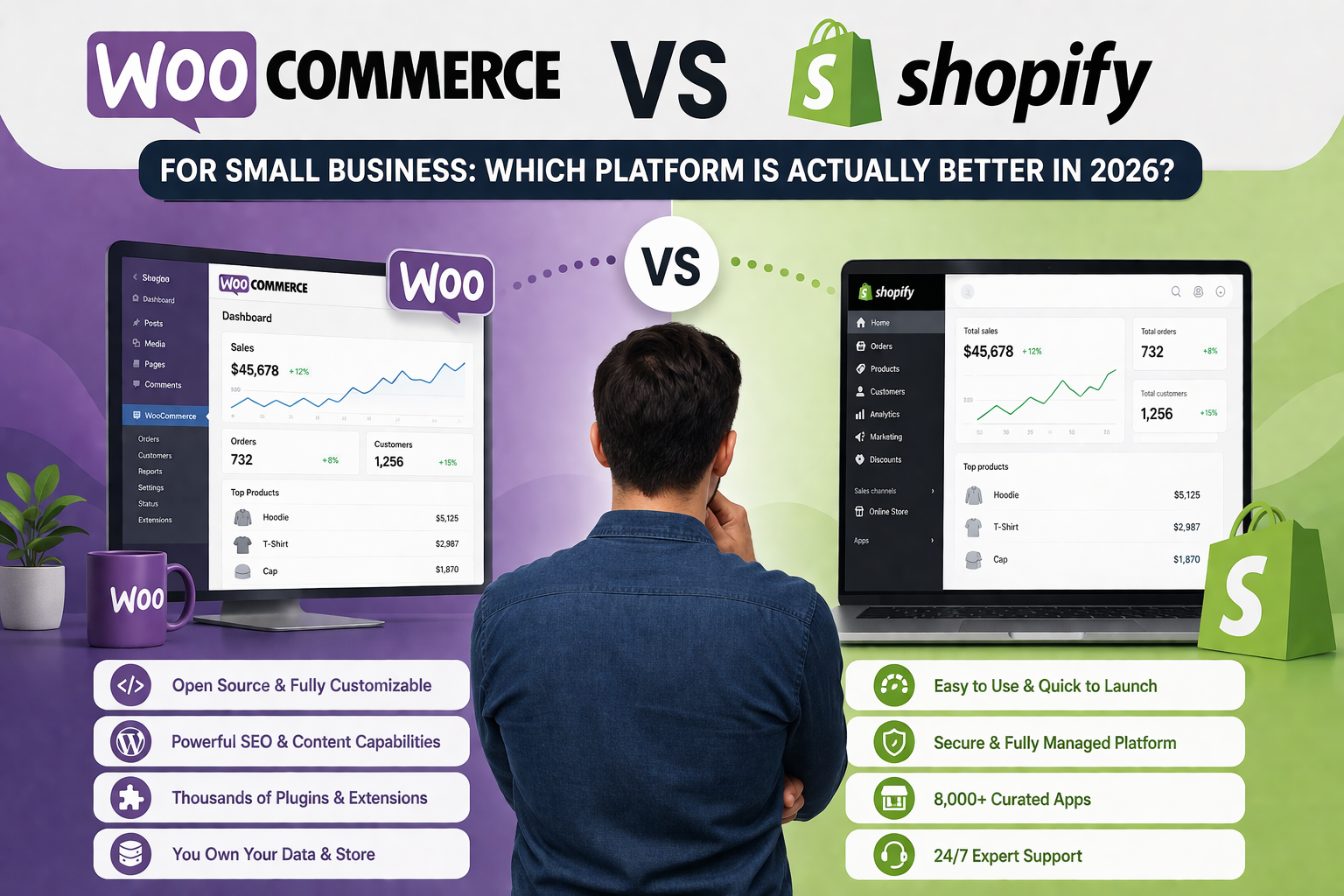
Running an e-commerce store with local SEO? You are looking at over $250 per year in Yoast add-ons alone. If you are weighing your full platform costs, our breakdown of WooCommerce vs Shopify for small business covers what each platform actually costs to run in 2026.
Rank Math pricing
- Free version: schema builder, 5 keywords, GSC integration, redirections, 404 monitor, with no time limit
- Rank Math Pro: approximately $84/year for unlimited sites
Bottom line: Rank Math’s free tier competes directly with Yoast Premium. Rank Math Pro at roughly $84/year replaces what would cost over $250 in Yoast add-ons for most small business owners.
Performance and speed
Page speed is a confirmed Google ranking factor. Both plugins run inside WordPress, but their architecture affects site performance differently.
Yoast loads a consistent set of scripts and database queries on every page load, regardless of which features you are using. Rank Math’s modular design means inactive features generate zero queries. If you have not enabled the News SEO or Video SEO modules, they simply do not run. On shared hosting, where most small businesses start, this difference is measurable. You can verify it yourself using Query Monitor.
What most people get wrong about Rank Math vs Yoast SEO
The most common mistake is treating Yoast’s longer track record as proof that it is still the better tool. Yoast was the default for years because there was no real competition, not because it was always the most capable option. That changed when Rank Math launched with a strategy of making premium features free, and the professional SEO community has largely recognized the shift.
The second mistake is ignoring the total cost of ownership. Calculate what you actually need: schema, redirects, multiple keyword targets, and rank tracking. Then price both plugins honestly. For most small businesses, the answer becomes clear very quickly.
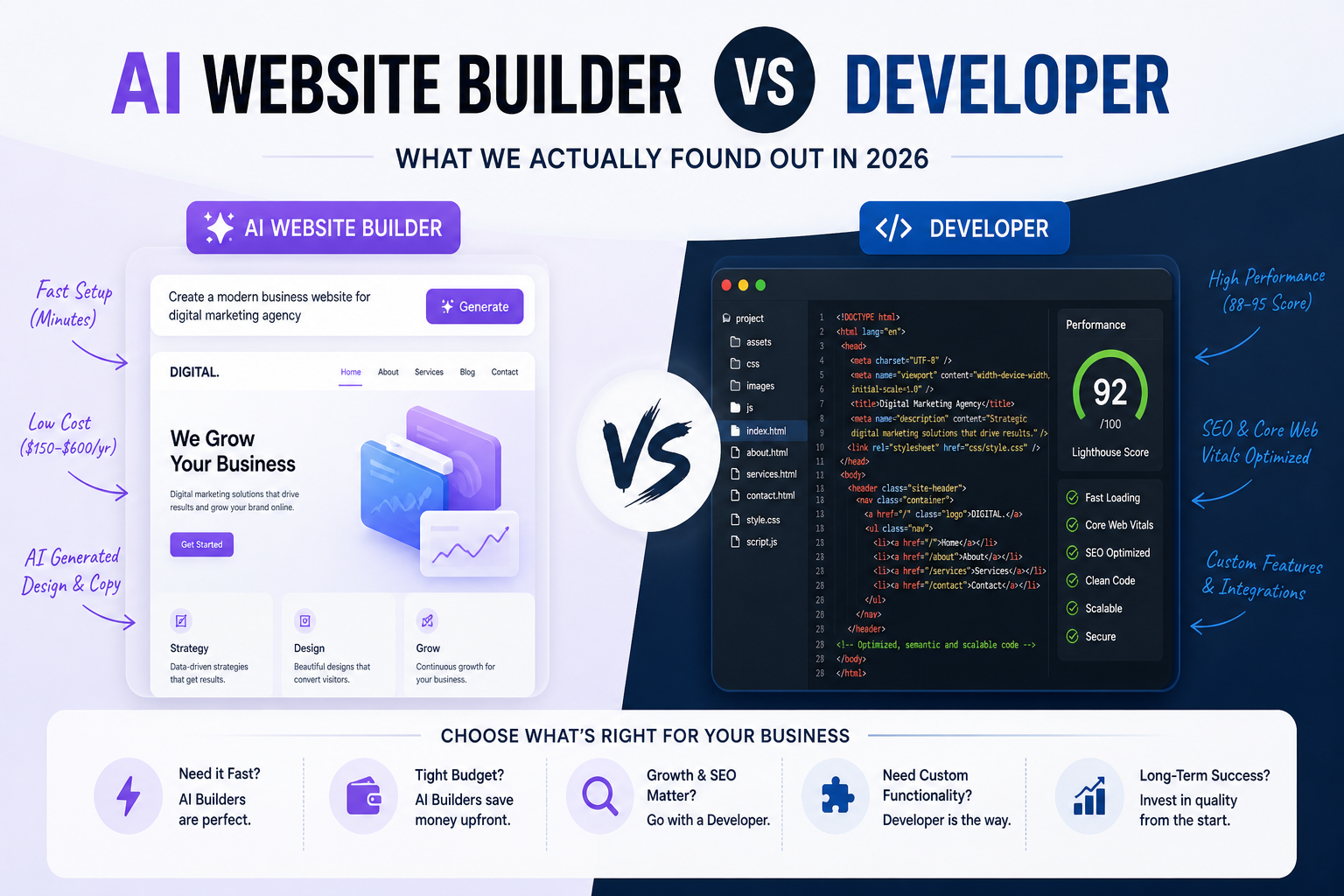
Your SEO plugin choice also connects to deeper decisions about how your site is built. Our guide on custom WordPress development vs templates explains how your site’s foundation affects SEO performance in ways no plugin can fix on its own.
Best for your situation
Best for complete beginners
If you want the simplest possible setup and a guided editing experience, start with Yoast SEO Free. That said, if you are willing to spend an extra 20 minutes on configuration, Rank Math Free gives you a stronger foundation from day one.
Best for SEO-focused businesses
Rank Math wins clearly here. Native GSC integration, multi-keyword support, and a built-in schema builder make it the stronger choice in the Rank Math vs. Yoast SEO debate for anyone actively working to improve their rankings without paying for extras.
Best for scaling e-commerce or content businesses
Rank Math Pro, at roughly $84/year, handles WooCommerce SEO, local SEO, rank tracking, and advanced schema without requiring multiple paid add-ons. It is designed to grow with your business as your content and product catalog expand.
Conclusion
The Rank Math vs. Yoast SEO question does not have a single answer for every business, but for most small businesses in 2026, Rank Math is the smarter investment. It delivers more capability for less money, and its free tier alone outperforms what Yoast charges for in its premium plan.
Yoast SEO remains a dependable tool for beginners and non-technical teams. But if you care about rankings and want to avoid paying for multiple add-ons as your business grows, Rank Math is the clear winner in this comparison.
If you want to make sure you are targeting the right keywords before you even configure your plugin, Lucanix helps small businesses build content strategies grounded in real data rather than guesswork. The right plugin is step two. Knowing what to rank for is step one.
Frequently asked questions
Is Rank Math better than Yoast SEO for small businesses in 2026?
For most small businesses, yes. Rank Math offers more features in its free version, including multiple keyword optimizations, schema markup, and GSC integration, than Yoast provides in its paid plan. Unless simplicity is your top priority, Rank Math delivers better value in the Rank Math vs. Yoast SEO comparison.
Can I switch from Yoast to Rank Math without losing my SEO data?
Yes. Rank Math includes a built-in migration tool that imports your existing Yoast meta titles, descriptions, and focus keywords. The process takes a few minutes and preserves your on-page SEO configuration.
Does Rank Math slow down my WordPress site?
Not significantly, and often less than Yoast. Rank Math’s modular design means deactivated features generate zero database queries. On shared hosting, this performance difference is real and measurable.
Is Yoast SEO free enough for a small business?
It covers the basics, including meta tags, XML sitemaps, and basic content analysis. But if you need multiple keyword targets, schema control, redirects, or GSC data, you will hit its limitations quickly. Rank Math Free covers all of those areas at no cost.
Which plugin do professional SEOs recommend in 2026?
Professional communities have shifted largely toward Rank Math for new site builds. Yoast retains users in long-established agencies with existing workflows, but Rank Math is now the more common recommendation among working SEO professionals.
Do I need a premium SEO plugin as a beginner?
No. Both free versions cover the fundamentals well. The more important early investment is understanding what keywords your audience searches for. Get your content strategy right before worrying about premium features.