
Local SEO in 2026: The Complete Strategy for Service Businesses That Want to Rank in Their City
Build a local seo strategy for small business 2026 that wins map pack rankings and AI citations. Step-by-step guide for US service businesses. Start today.

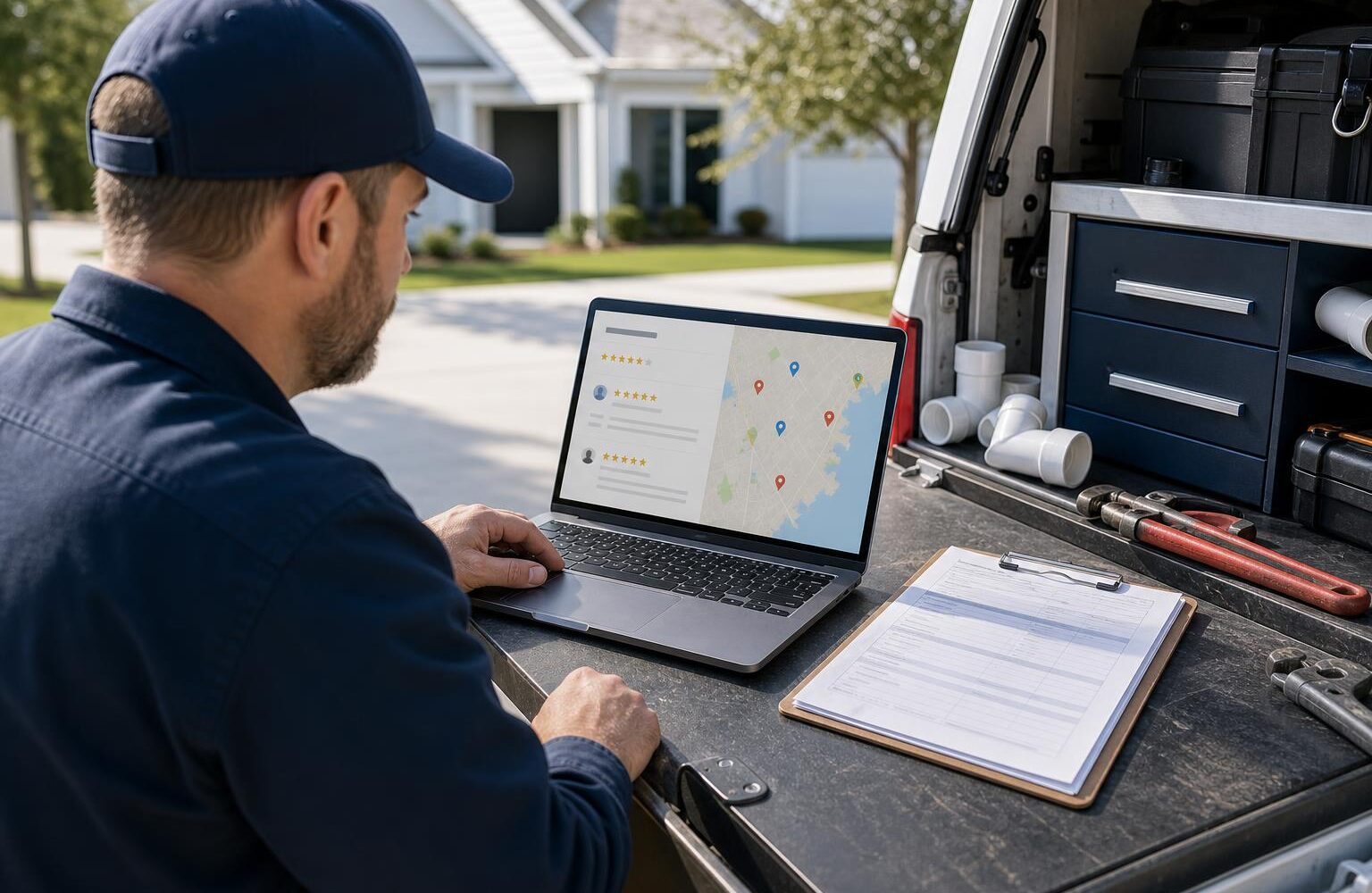
A local seo strategy for small business 2026 looks very different from the one that worked in 2022, and most service businesses are still running the old playbook. Google’s map pack, AI Overviews, and conversational search tools now decide who gets the phone call before a prospect ever visits a website. If you run a plumbing, HVAC, legal, cleaning, or landscaping business, your city ranking depends on a handful of signals you can control.
This guide walks through the exact sequence we use at Lucanix: profile, website, citations, links, reviews, and AI visibility. It is built for service-area businesses in the US with budgets between a few hundred and a couple thousand dollars a month. Skip the vanity metrics. Focus on calls, form fills, and booked jobs.
Why Local Search Works Differently in 2026
Local search is no longer ten blue links. For a query like “emergency plumber near me,” Google shows an AI summary, a map pack with three businesses, and then organic results. The map pack alone captures a large share of clicks on commercial local queries, which is why your local seo strategy for small business 2026 has to start there rather than with blog posts.
Three forces shape results now. First, proximity still matters, but relevance and prominence increasingly decide who wins inside a given radius. Second, AI systems pull from Google Business Profile data, reviews, and third-party mentions to recommend providers. Third, mobile and voice searches skew heavily toward “now” intent, so speed and clarity win.
Google documents how local ranking works in its own help centre: relevance, distance, and prominence. Read the official explanation at Google Business Profile Help and treat it as your scoring rubric. Everything in this article maps back to those three factors.
The practical takeaway: you are competing on a small set of verifiable signals. Businesses that treat local SEO as a one-time setup lose to competitors who maintain it weekly.
Step 1: Audit Your Current Local Footprint
Before you change anything, document where you stand. Search your top five service keywords plus your city from a private browser window, then repeat from three different neighbourhoods inside your service area. Record who appears in the map pack, your position, and which competitors show up repeatedly.
Then check your business name, address, and phone number (NAP) across the web. Inconsistencies like “Suite 4” versus “Ste. 4” or an old tracking number split your authority across duplicate listings. Build a simple spreadsheet with these columns:
- Platform: Google, Apple Business Connect, Bing Places, Yelp, Facebook, industry directories
- Listing status: claimed, unclaimed, duplicate, or missing
- NAP accuracy: exact match, partial, or wrong
- Category and hours: correct or outdated
Also review your website for technical blockers. A slow, broken, or non-mobile site undermines every other local signal. Our technical SEO audit checklist covers the 20 issues worth fixing first, and the technical SEO audit checklist is a sensible starting point before you spend money on links.
This audit usually takes two to four hours and reveals the cheapest wins. In our experience, a single duplicate listing or wrong primary category can explain a ranking plateau that months of content never fixed.
Step 2: Optimize Your Google Business Profile
Google Business Profile optimization is the highest-return task in any local SEO plan. Your profile is often the first thing a customer sees, and it feeds both the map pack and AI answers. Treat it as a landing page, not a directory entry.
Start with the fundamentals. Choose the most specific primary category (for example “Emergency plumber” rather than “Plumber” if that matches your core work), then add up to nine relevant secondary categories. Write a business description of roughly 700 characters that names your services and service areas naturally. Set accurate hours, including holiday hours, and add every service you offer with a short description and price range where possible.
Then build out the visual and trust layer:
- Upload 25 to 50 real photos: your team, branded vehicles, finished jobs, and tools. Stock photos hurt trust.
- Add a short video walkthrough or job-in-progress clip each month.
- Enable messaging and set a response time goal under one hour.
- Publish a Google Post weekly with an offer, seasonal reminder, or recent job.
- Complete the Q&A section yourself with the ten questions customers ask most.
Service-area businesses should hide their home address and define service areas by city or postal code, with no more than the areas you genuinely cover. Over-claiming territory is a common reason for suspension flags.
Google Business Profile optimization is not a set-and-forget task. Businesses that post, answer questions, and upload fresh photos every week consistently outrank static profiles with the same categories.

Local SEO for Service Businesses: Building Location Pages That Rank
Local SEO for service businesses lives or dies on how well your website answers one question: do you do this service in my city? A single “Services” page with a list of towns will not do it. You need dedicated pages for each core service and each priority location.
Use a clear structure. Create one page per service (“Water Heater Replacement”) and one page per city you want to win (“Plumber in Austin, TX”), then connect them where a service-plus-city combination has real demand and real work behind it. Avoid thin, copy-pasted pages with only the city name swapped. Google calls this out as doorway behaviour in its spam policies, which you can review on Google Search Central.
Each location page should include:
- A unique opening paragraph that references the neighbourhoods, landmarks, or housing stock you actually serve
- Three to five recent projects or customer stories from that area, with photos
- Local reviews or testimonials naming the city
- A clear call-to-action with a trackable phone number and form
- An embedded map and your exact service radius
This is where a thoughtful local seo strategy for small business 2026 separates itself from templated agency work. Real local detail is hard to fake, and both Google and AI systems reward it.
Work with Lucanix
Ready to turn your service pages into a lead engine?
Lucanix builds location and service pages designed to rank in your city and convert visitors into booked jobs.
On-Page Signals That Tell Google Where You Operate
Beyond location pages, several on-page elements reinforce your geographic relevance. Get these right across the entire site, not just on a handful of pages.
Put your city and primary service in the title tag and H1 of your homepage and key landing pages, written naturally. Keep titles under 60 characters. Add your NAP in the footer, matching your Google Business Profile exactly, and mark it up with LocalBusiness schema using JSON-LD. Include your service areas, opening hours, price range, and links to your social profiles inside the schema.
Schema is a differentiator because many small business sites skip it. Google’s structured data documentation explains the required and recommended properties at Google’s LocalBusiness structured data guide. Validate your markup with the Rich Results Test before publishing.
Core Web Vitals also matter for local mobile users. Aim for a Largest Contentful Paint under 2.5 seconds and a clean mobile layout with a tap-to-call button above the fold. Details on measuring these are on web.dev.
If your site runs on WordPress, a fast, lean build matters more than a heavy page builder. We compare the trade-offs in custom WordPress development vs templates, which is worth reading before a redesign.
Citations and NAP Consistency Without the Busywork
Citations are mentions of your business name, address, and phone number on other websites. They matter less than they did a decade ago, but they still confirm that your business is real and consistent. Inconsistent data creates doubt, and doubt costs you map pack positions.
Prioritise quality over volume. Claim and verify these first: Google Business Profile, Apple Business Connect, Bing Places, Facebook, Yelp, Better Business Bureau, and Nextdoor. Then add the major data aggregators and two or three industry-specific directories (for example Angi, HomeAdvisor, Avvo, or Houzz, depending on your trade).
Use this quick comparison to decide where to spend your time:
| Citation type | Examples | Priority | Time needed |
|---|---|---|---|
| Core platforms | Google, Apple, Bing, Facebook | Critical | 2 hours |
| Review sites | Yelp, BBB, Trustpilot | High | 2 hours |
| Industry directories | Angi, Houzz, Avvo | High | 3 hours |
| General directories | Yellow Pages, Manta | Medium | 2 hours |
| Low-quality directories | Mass submission sites | Avoid | None |
Fix every wrong listing you found in your audit before adding new ones. One consistent business name, one primary phone number, and one address format everywhere is the goal.
Reviews: The Fastest Lever for Map Pack Rankings
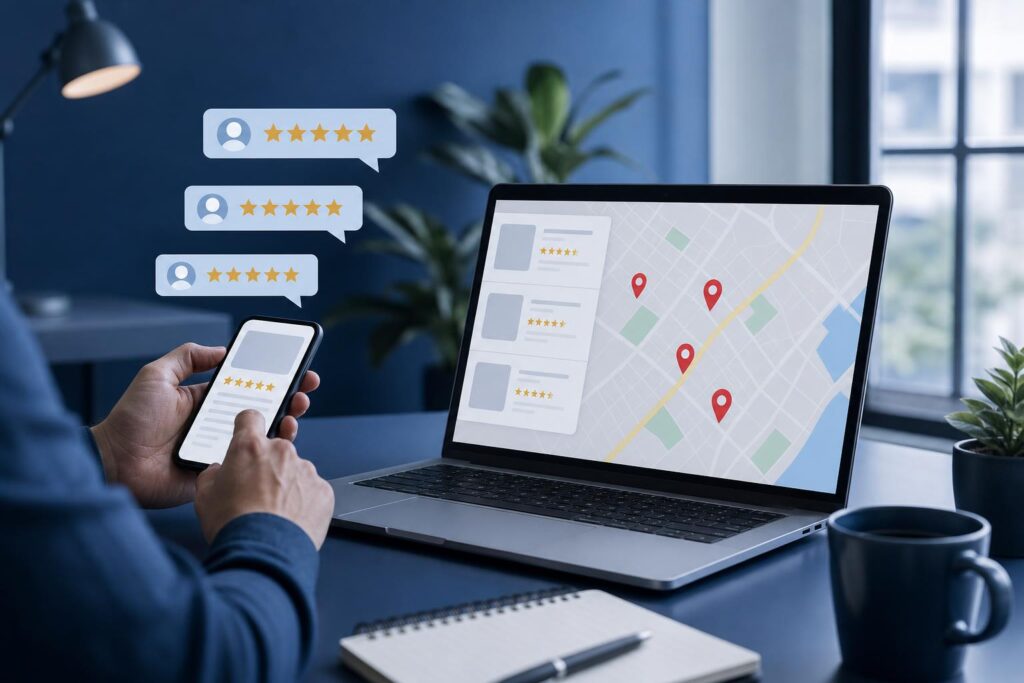
Reviews influence both rankings and conversions. A business with 120 recent four-and-a-half-star reviews will typically beat a competitor with 15 reviews, even if the smaller business is closer to the searcher. Volume, recency, rating, and the keywords customers naturally use all contribute.
Build a repeatable review system rather than asking when you remember. After each completed job, send a text with a direct link to your Google review form within two hours, while satisfaction is highest. Train your technicians to mention it on-site. Aim for a steady flow of three to eight new reviews per month rather than a burst followed by silence.
Reply to every review within 48 hours. For positive reviews, thank the customer by name and mention the service. For negative reviews, respond calmly, acknowledge the problem, and offer to resolve it offline. Potential customers read your replies as closely as the reviews themselves.
Never buy reviews, offer discounts in exchange for them, or gate reviews by only asking happy customers. Google’s policies prohibit these practices and can remove reviews or suspend your profile. A clean, steady review engine is cheaper and safer than any shortcut.

Local Link Building That Actually Moves Rankings
Prominence in Google’s eyes comes partly from links and mentions from trusted local sources. You do not need hundreds of backlinks. You need a dozen or so relevant, local ones that a competitor would struggle to copy.
Start with relationships you already have. Ask your suppliers, manufacturers, and trade associations for a link on their “find a pro” or partner page. Sponsor a youth sports team, a charity run, or a school event, and request a link from the organisation’s website. Join your local chamber of commerce and any neighbourhood business associations, which typically include a member directory link.
Then create link-worthy local assets:
- Publish original local data, such as average repair costs in your city or a seasonal maintenance calendar for your region.
- Offer a local expert quote to journalists through reporter request platforms and your regional news outlets.
- Partner with complementary businesses (a realtor, an inspector, an interior designer) for co-written guides and cross-links.
- Get listed in city and county resource pages, especially .gov and .edu pages that list approved vendors.
Avoid private blog networks, paid link farms, and mass guest posting. They create short-term spikes and long-term risk. If you want a broader view of how links and content fit together, see how AI is changing on-page SEO for what still carries weight.
AI Search Visibility: Getting Recommended, Not Just Ranked
AI search is now part of every local seo strategy for small business 2026. Tools like Google AI Overviews, ChatGPT, Perplexity, and Gemini answer local questions directly, often naming two or three providers. Being one of them requires clear, consistent, verifiable information about your business across the web.
Make your website easy for AI systems to quote. Add a concise FAQ section to each service and location page with direct answers in the first sentence. Include real pricing ranges, service times, warranty terms, and licence numbers. State facts plainly: “We repair tankless water heaters in Denver, typically within 24 hours, starting at $149.” Specific, quotable statements get cited.
Strengthen off-site signals too. AI models draw heavily from reviews, directory profiles, local news, and forum discussions. A strong Google Business Profile, a healthy review count, and mentions in local publications all increase the odds of being recommended.
We cover the broader tactics in our guides to generative engine optimisation and AI search optimization for WordPress. Both explain how to structure content so that language models can extract and trust it.
[CTA_PLACEHOLDER_REMOVED]
Tracking Results and Building a Monthly Routine
Local SEO is a habit, not a project. Set up measurement first so you can tell what is working. Connect Google Analytics 4, Google Search Console, and your Google Business Profile insights. Use call tracking numbers with dynamic insertion on your site and a separate tracked number on your profile, then record calls, direction requests, and form submissions as conversions.
Track these metrics monthly:
- Map pack rankings for your top ten service-plus-city keywords, measured with a grid-based rank tracker
- Profile actions: calls, website clicks, direction requests, and messages
- New reviews, average rating, and response time
- Organic leads and cost per lead from search
- Branded search volume, which signals growing local awareness
A realistic monthly routine for a small team looks like this. Week one: publish a profile post and add new photos. Week two: request reviews from recent jobs and reply to any outstanding ones. Week three: publish or update one location or service page. Week four: pursue one new local link and review your numbers.
Most service businesses see map pack movement within 60 to 90 days of consistent work, with compounding gains over six to twelve months. If you have a budget, content and SEO retainers typically run $800 to $2,000 per month, which usually covers this entire routine.
Common Local SEO Mistakes to Avoid
Most local ranking problems come from a short list of repeat errors. Fixing them is often faster than adding anything new.
- Keyword-stuffed business names. Adding “Best Plumber Dallas” to your profile name violates Google’s guidelines and risks suspension.
- Virtual offices and fake addresses. Google verifies locations, and mismatches get profiles removed.
- Wrong primary category. This single field has an outsized effect on which searches you appear for.
- Ignoring mobile. Most local searches happen on phones, so a slow site loses calls to faster competitors.
- Duplicate location pages. Thin city pages with swapped names dilute your site and can trigger spam filters.
- Neglecting negative reviews. Unanswered complaints cost more jobs than the reviews themselves.
Another frequent issue is changing your phone number or name without updating every citation. Treat NAP as fixed data and update it everywhere at once if it must change.
If your site is outdated, a rebuild can unlock all of this at once. Our breakdown of website costs shows what a realistic budget looks like before you start, and a strong site paired with a disciplined local seo strategy for small business 2026 is the combination that wins consistently.
Frequently Asked Questions
How long does local SEO take to work?
Most service businesses see early map pack movement in 60 to 90 days with consistent profile updates, review generation, and citation cleanup. Competitive cities and categories can take six to twelve months to reach the top three positions.
What is the most important ranking factor for the Google map pack?
Google cites relevance, distance, and prominence. In practice, your primary category, review volume and recency, and the accuracy of your profile information carry the most weight you can directly control.
How much does local SEO cost for a small business?
Many service businesses spend between $500 and $2,000 per month for ongoing local SEO, depending on competition and service area size. One-time setup work such as profile optimisation and location pages typically ranges from $1,500 to $5,000.
Do I need a physical office to rank locally?
No. Service-area businesses can hide their address and define the cities they serve. You must still have a legitimate way to serve customers in those areas, and Google may verify your business through video or documentation.
How do I get my business recommended by AI tools like ChatGPT or Google AI Overviews?
Maintain consistent business information across the web, collect steady reviews, publish clear FAQ content with specific facts and prices, and earn mentions from local publications. AI systems favour businesses with verifiable, consistent signals.
How many Google reviews do I need to rank?
There is no fixed number, but you should aim to match or exceed the top three competitors in your market. Recency matters as much as total count, so a steady flow of new reviews each month is more effective than a one-time burst.
Work with Lucanix
Want a local SEO plan built around your city and services?
Book a free consultation or request a fixed-price proposal from Lucanix, and we will map out exactly what it takes to reach the top of your local map pack.