AI Search Optimization: A Powerful Guide for Your Website in 2026


Your website ranks on Google. But when someone asks ChatGPT, Perplexity, or Google’s AI Mode the same question your best article answers, your site does not appear in the response. That is the AI search gap, and in 2026, it is costing small businesses real leads. Optimizing your website for AI search is a practical, achievable set of changes that any WordPress site owner can implement. This guide covers what actually works based on current research, not theory.
What Is AI Search Optimization?
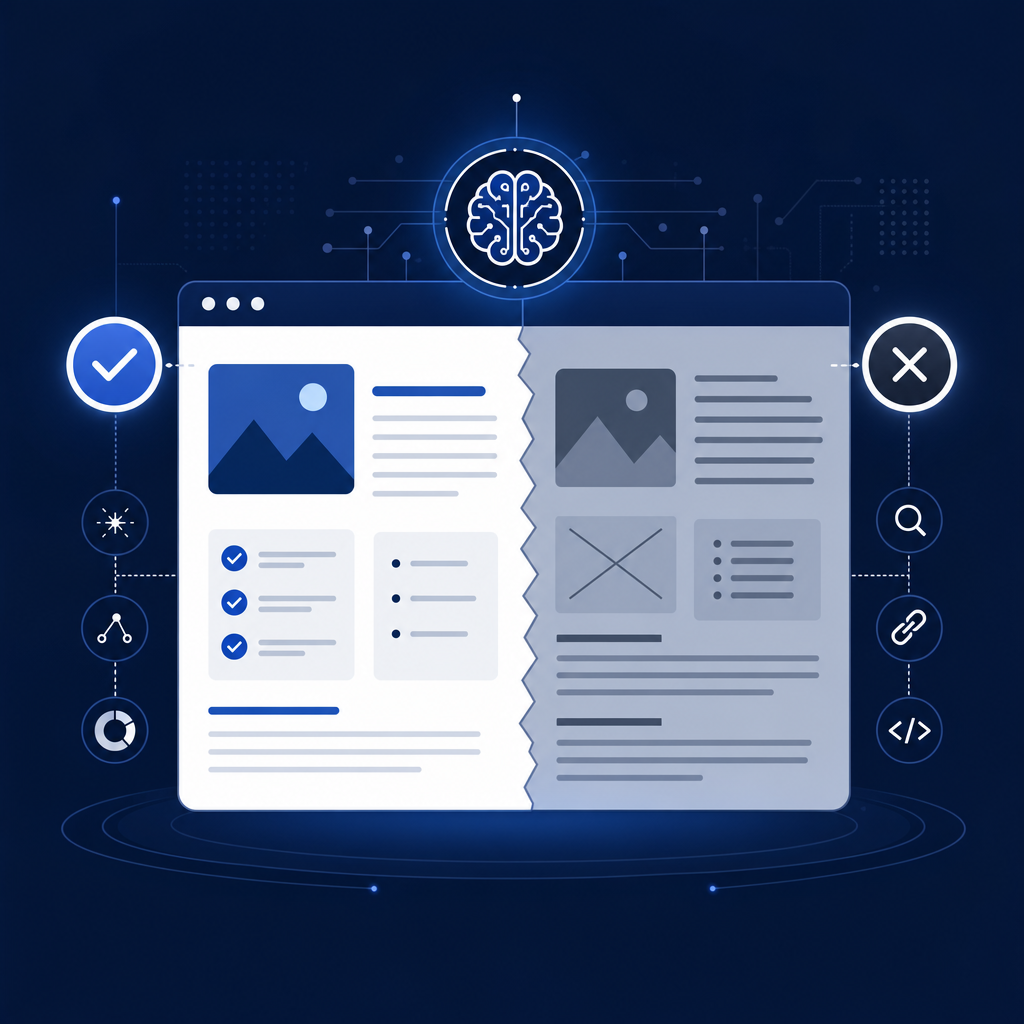
Traditional SEO gets your page to rank in Google’s blue link results. AI search optimization, known as GEO (Generative Engine Optimization) or AEO (Answer Engine Optimization), gets your content cited inside the AI-generated answer itself. A Brightedge study found that 52% of AI Overview citations came from URLs already ranking in the top ten organic positions, which means strong traditional SEO remains your foundation. GEO and AEO add the structural and contextual signals that tell AI systems your content is trustworthy and worth quoting.
Why This Matters More Than Most Small Businesses Realise
AI Overviews now appear in roughly 18 to 21% of all Google searches worldwide in 2026, and traditional organic click-through rates have dropped by over 30% as AI summaries answer queries directly on the results page. You can be producing genuinely useful content and still be invisible in AI-generated answers simply because your pages are not structured in a way AI systems can parse and cite. The good news: AI systems prioritise content quality and trustworthiness over business size, meaning small businesses can compete with larger brands if the structure is right.
1. Write Answer-First Content
AI systems extract information by scanning for direct answers at the top of each section. Burying your key point in the third paragraph means AI skips it. Start each section with the main point, then add supporting details. Keep paragraphs short at two to three sentences so AI can extract key points cleanly. On WordPress, this means leading with the answer in your first paragraph, using H2 and H3 headings that mirror actual user questions, and cutting any preamble that delays the point.
2. Add Schema Markup to Every Key Page
Schema markup tells AI systems exactly what your content represents. A Semrush study found a correlation between schema use and AI citations, likely because schema adds context and credibility that AI systems can analyse. On WordPress, Rank Math and Yoast SEO handle this without manual code. The types that matter most for small businesses: FAQPage schema makes your question-and-answer sections directly extractable by AI. LocalBusiness schema tells AI where you operate and how to contact you. Article schema with named author details signals that real, credentialled people are behind the content, directly supporting your E-E-A-T standing.
3. Build Topical Clusters Around Your Core Topics
AI systems infer relationships across pages, not just within them. A topical cluster is a group of articles around one subject, connected through internal links, categories, and consistent terminology, that signals to AI your site has genuine authority on a topic. For a small business WordPress site, this means one pillar page on your core service, supported by three to five related articles that each cover a specific subtopic and link back to the pillar. The WooCommerce vs Shopify comparison, the WooCommerce developer guide, and the headless WordPress article are examples of this cluster structure in practice.
4. Make Your Site Technically Open to AI Crawlers
Your content cannot be cited if AI crawlers cannot access it. Configure your robots.txt to explicitly allow GPTBot, ClaudeBot, and PerplexityBot. Many WordPress sites block these crawlers inadvertently through overly restrictive security plugins. Beyond access, AI search in 2026 prioritizes sub-two-second load times: a slow site gets deprioritized in favor of faster, more accessible sources. Check your robots.txt and confirm none of the major AI crawler agents are blocked. Your hosting provider or caching plugin may have added these restrictions without your knowledge.
5. Show Real Authorship and Build Trust Signals
AI systems infer trustworthiness through authorship, credentials, and external validation. Every article should have a named author with a bio that establishes relevant expertise. Your About page should clearly describe who is behind the business and what experience they bring. Your Contact page, privacy policy, and terms of service should all be complete and easily accessible: these are signals AI systems use to assess whether a site is a legitimate source worth citing.
6. Add FAQ Sections to High-Value Pages
FAQ sections are one of the most direct ways to get cited in AI-generated answers. On WordPress, use H3 headings for each question or your SEO plugin’s FAQ block to automatically apply FAQPage schema. The questions should mirror what your actual customers ask: check Google Search Console for the queries bringing people to your site and answer those directly.
What Most Small Businesses Get Wrong
The most common mistake is treating AI search optimization as a separate project from traditional SEO. They reinforce each other. SEO is the foundation; GEO and AEO layer on top. The second mistake is optimizing for keywords rather than topics. AI systems do not match keywords: they understand topics and look for content that comprehensively covers what users expect. A page that only covers half the subtopics an AI considers relevant to a query is less likely to be cited, regardless of how well it ranks. The article on AI website builders versus professional developers covers how site architecture affects both traditional rankings and AI visibility and why the two are more connected than most assume.
Frequently Asked Questions
What is the difference between SEO, GEO, and AEO? SEO (Search Engine Optimization) focuses on ranking your content in traditional Google results. GEO (Generative Engine Optimization) optimizes your site to be cited in AI-generated answers from systems like ChatGPT, Gemini, and Perplexity. AEO (Answer Engine Optimization) specifically targets featured snippets and direct question-answer formats. In 2026, you need all three working together, with traditional SEO as the foundation.
Can small businesses actually rank in AI search results? Yes. AI search systems prioritize content quality, structure, and trustworthiness over domain authority or business size. A well-structured, clearly written, schema-marked-up page on a small business WordPress site can be cited by ChatGPT or appear in Google AI Overviews ahead of larger competitors whose content is less clearly organized.
How long does AI search optimization take to show results? Results from AI search optimization typically begin to appear within 60 to 90 days of implementing a consistent strategy. Building topical authority and earning E-E-A-T signals takes time, but businesses that publish high-quality, structured content consistently will see growing visibility in AI-generated answers within a few months.
If you are working on making your WordPress or WooCommerce site more visible in AI-generated search results and want a grounded perspective on what fits your specific situation, Lucanix works with businesses at the intersection of web strategy and organic growth.