An SEO strategy that helped the LBDRC reach more of the families and caregivers looking for support with Lewy body dementia.
Lewy Body Dementia Resource Center
Nonprofit, dementia support
SEO, content strategy
One Year
Monthly organic visitors from Google
Search click-through rate
Rankings for most targeted terms, many at number one
In their words
- Norma Loeb
Founder, Lewy Body Dementia Resource Center
01 · The client
The Lewy Body Dementia Resource Center (LBDRC) is a nonprofit that provides free information, support, and community to everyone navigating LBD. They run support groups, and acts as a point of contact for people trying to understand a condition that is frequently misdiagnosed and poorly understood.
When someone learns that a family member has Lewy body dementia, they usually turn to Google to understand what it means and where to get help. The LBDRC wanted its website to appear during those searches so it could reach more of the people looking for support.
02 · The challenge
The LBDRC wanted more people who need support to find them online, particularly families and caregivers looking for answers after a diagnosis. Most of what these people search for is built around one keyword, “Lewy body dementia,” and it is one of the hardest medical terms to rank for.
When you search “Lewy body dementia” on Google, the first page is filled with hospitals, medical publishers, and national health organizations, all with far more domain authority. Google also holds health-related searches to a higher standard than most topics. Before it ranks a page about a medical condition, it looks for signs of expertise and trustworthiness, which gives established medical sources a clear advantage over smaller sites like the LBDRC’s.
03 · How Lucanix responded
We built the LBDRC’s content strategy around “Lewy body dementia” as the main keyword, starting with the low-hanging fruit. These are the specific questions families search for after a diagnosis, such as the early signs of Lewy body dementia, when someone with LBD should stop driving, how to handle delusions and paranoia, and where to find a support group, among many others. Each of these searches brings in the people the LBDRC exists to help.
We started with a technical audit of the website to find the issues affecting how it performed in search. We also reviewed the existing blog posts to see which ones were bringing in traffic and which ones needed updating, then carried out keyword research to find the questions families and caregivers were searching for around Lewy body dementia.
Phase one
We then fixed the gaps the audit uncovered. Many pages were missing meta descriptions, so we wrote them for every page, starting with the most important ones. We corrected missing and duplicate H1 tags and cleaned up the heading structure so search engines could understand what each page was about. We removed unnecessary pages that added no value to the site and redirected them where needed, fixed broken links, and merged pages that covered the same topic so they stopped competing with each other in search.
Phase two
Using the audit and keyword research, we put together a content strategy for the LBDRC. It mapped out which topics to cover, the order to publish them in, and the keywords each piece would target, beginning with the issues most families face after a diagnosis.
Phase three
We created in-depth guides on the core issues families face and used them as pillar content. We then published supporting posts on related topics, each linking back to its guide. Every piece was researched, reviewed for accuracy, and optimized for search before it went live.
Phase four
04 · The result
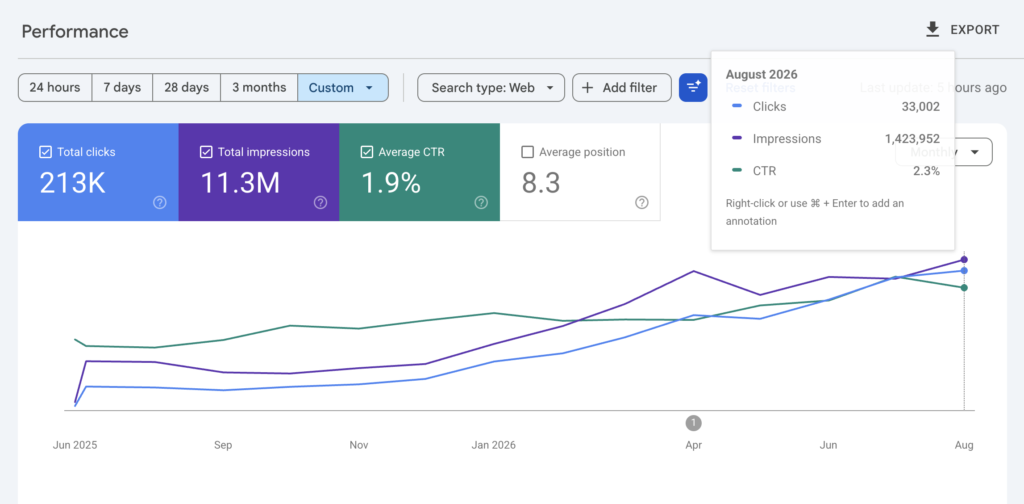
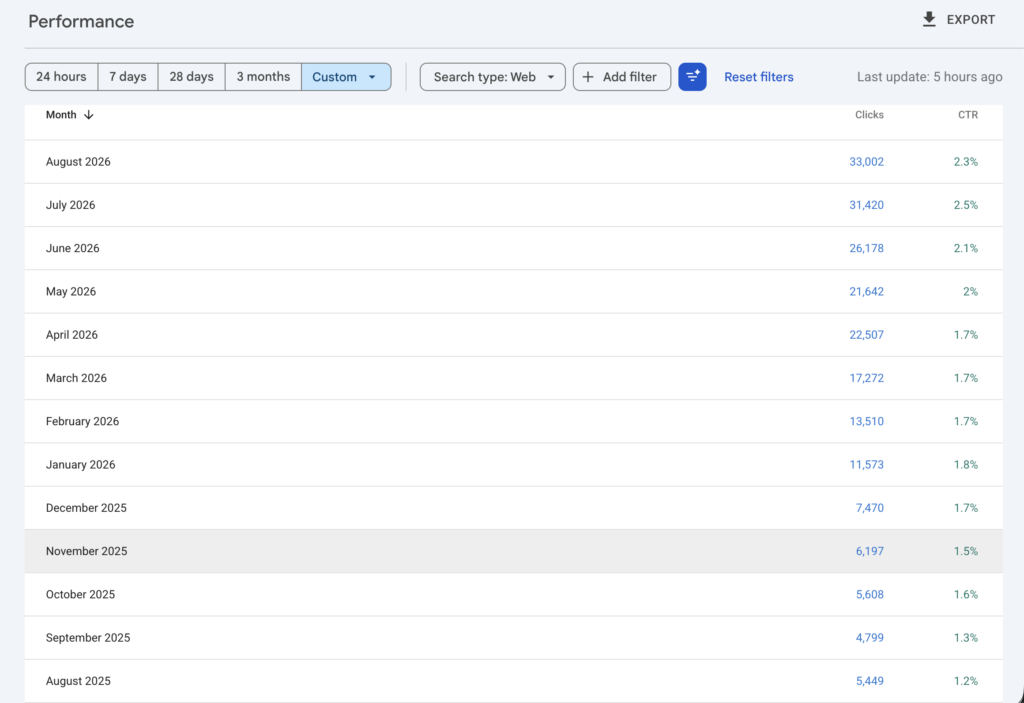
The LBDRC’s website now reaches far more of the people it was built to serve. Monthly organic traffic from Google grew from 6,000 visitors to over 30,000. In one year, the number of times the site appeared in Google search results grew from 80,000 impressions to 1.4 million. The click-through rate also rose from 1.3% to 2.3%, so a larger share of the people who saw the LBDRC in search results clicked through to the website. The growth in traffic has led to more people reaching out. The LBDRC now receives more requests to join its support groups, and more families are getting the help and guidance they need.