
Backlink Building for Small Businesses: 9 Strategies That Still Work in 2026
Backlink building for small business does not need a big budget. Learn 9 ethical, proven strategies that earn real links in 2026, plus the pitfalls to avoid.

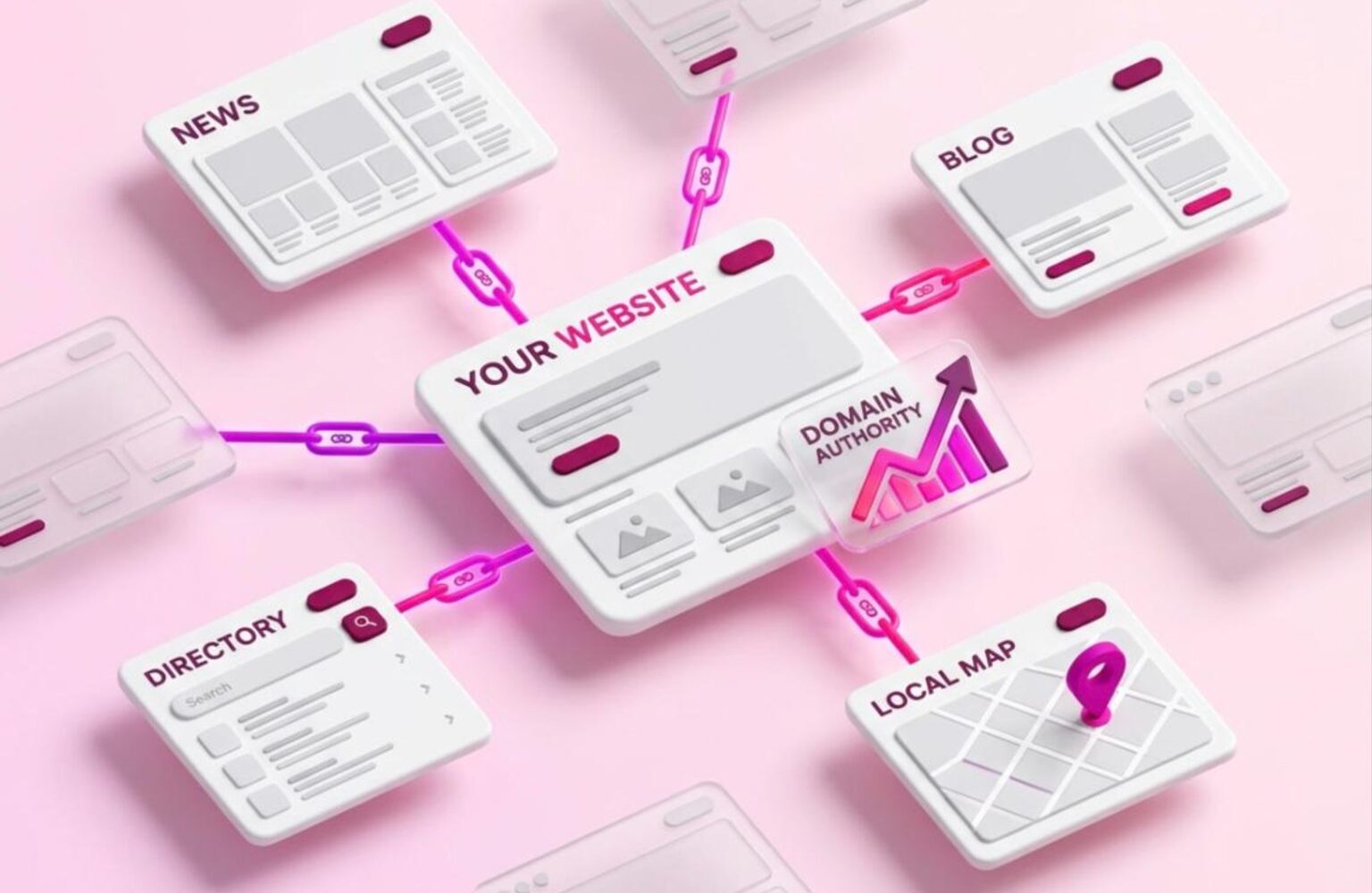
Backlink building for small business is the part of SEO that most owners either ignore or get badly wrong, and the cost of both mistakes is the same: stalled rankings and a competitor who looks more trustworthy to Google. Links remain one of the strongest ranking signals in 2026, but the tactics that worked five years ago now get sites penalised or ignored. This guide covers nine strategies that still work, what they cost, how long they take, and the traps that waste budgets.
Why Backlinks Still Matter in 2026
A backlink is a link from another website to yours. Search engines treat each one as a vote of confidence, and votes from credible, relevant sites carry far more weight than votes from random ones. Google has stated repeatedly that links remain a core signal, and its documentation on spam policies exists precisely because link manipulation still works well enough to be worth policing.
AI search has not killed links either. Tools such as ChatGPT, Perplexity and Google’s AI Overviews tend to cite sources that already rank well and are mentioned across the web. That means backlink building for small business now pays twice: it lifts classic rankings and it raises the odds that AI engines treat your brand as a credible source.
The honest caveat is that links are not a shortcut. If your site is slow, thin on content or technically broken, links will not rescue it. Fix the foundation first, ideally with a technical SEO audit, then build links to pages that deserve to rank.
What Realistic Backlink Building for Small Business Looks Like
Most small businesses do not need hundreds of links. They need a handful of strong, relevant ones that beat what local or niche competitors already have. A plumber in a mid-sized city might need 15 to 30 quality referring domains to compete. A B2B software startup in a crowded niche might need 100 or more.
Before you start, check what your competitors have. Run their domains through a backlink tool such as Ahrefs, Semrush or the free tiers of Ahrefs Webmaster Tools, then count the referring domains pointing to the pages that outrank you. That number is your benchmark, not a vague idea of “more links.”
Set expectations on timing as well. A well-run campaign usually takes three to six months to show a measurable ranking effect, and a quality link can cost anywhere from nothing (earned through relationships) to several hundred dollars (earned through outreach labour). Anyone promising 50 links for $200 is selling you a problem. If you want to tie this effort to revenue, our guide to measuring SEO ROI shows how to track it.
Strategy 1: Claim Every Legitimate Local and Industry Citation
This is the cheapest, fastest starting point. Business directories, chambers of commerce, trade associations and industry bodies often give you a profile page with a followed or at least relevant link. These are not powerful on their own, but they establish a baseline and confirm your business details across the web.
Start with the obvious ones: Google Business Profile, Bing Places, Apple Business Connect and your national chamber of commerce. Then look for trade bodies in your sector. A UK roofer belongs on the NFRC member directory; a US accountant on the state CPA society page.
Avoid mass-submission directories that accept anything. If a directory lists plumbers, casinos and payday loans on the same page, skip it. Ten relevant listings beat 200 junk ones, and they feed directly into local SEO performance as well.
Strategy 2: Build Linkable Assets People Actually Cite
A linkable asset is a page that gives other writers a reason to reference you. Original data, free tools, calculators, templates and genuinely useful guides all qualify. The common thread is that they save someone else time or give them a statistic they cannot find elsewhere.
You do not need a research budget. Survey your own customers, publish anonymised averages from your own work, or analyse public data in a new way. A local fitness studio that publishes “average cost of personal training in [city], 2026” based on 40 phone calls to competitors will earn links from local bloggers and journalists who need that number.
Make the asset easy to cite. Put the headline stat in a clear sentence, add a simple chart, and include a short “how to cite this” line. This is the foundation of a sound content strategy for small business: each piece should have a reason to exist beyond targeting a keyword.
Strategy 3: Digital PR on a Small Budget
Digital PR means earning coverage from news sites, trade publications and blogs by offering something newsworthy. You do not need a PR agency retainer. You need a story angle, a short list of journalists and the discipline to follow up.
Tools like Qwoted, Featured and the free journalist-request channels let experts respond to media queries. Spend 20 minutes a day answering queries where you have genuine expertise, and expect a low hit rate: one placement per 15 to 25 pitches is normal. Each successful placement can deliver a link from a site that would be impossible to reach by cold outreach.
Local news is the most underused opportunity for small firms. Regional newspapers and city magazines need local stories constantly. A new hire, a charity partnership, a record-breaking quarter or a useful local data point can all earn a mention with a link when you present it cleanly.
Strategy 4: Guest Contributions That Pass the Quality Test
Guest posting has a bad reputation because of years of abuse, and Google’s guidance on link spam is clear that large-scale guest posting campaigns with keyword-rich anchors violate its policies. But contributing a genuinely useful article to a relevant publication is still legitimate and effective.
Apply a strict filter. The site should have real traffic, a real editorial standard, and an audience that overlaps with yours. If the site accepts “contributions” from any business that pays, walk away. Check whether it ranks for its own topics and whether its other authors are real people with credentials.
Write the piece as if you were not building a link. Give the editor something they would be proud to publish, link to your own site only where it is genuinely helpful, and use a natural, branded anchor. One strong contribution to an industry publication outperforms ten throwaway posts on content farms.
Strategy 5: Mine Your Existing Relationships
Your fastest, cheapest links often come from people who already like you. Suppliers, partners, customers, local charities you support and organisations you belong to may all have websites that could mention yours naturally.
Make a list of every business relationship you have and check whether each one links to you. Then ask, politely and specifically. A supplier can add you to a “where to buy” or “our partners” page. A customer can mention you in a case study they publish. A charity can thank sponsors on a page with links.
This approach has the best conversion rate of any tactic here, often 30 to 50 percent, because the relationship already exists. It also fits seamlessly with a case study approach: if a client is happy with your work, ask whether they would publish a short testimonial on their own site that links back.
Work with Lucanix
Ready to build links that actually move rankings?
Lucanix runs ethical, strategy-first SEO campaigns for small businesses. Book a free consultation and we will review your current link profile.
Strategy 6: Reclaim Unlinked Brand Mentions
Sometimes people mention your business without linking to it. A news article names your company, a blogger recommends your product, or a podcast host credits your team, and no link appears. These are the easiest links to win because the publisher already wants to credit you.
Set up alerts with Google Alerts, Ahrefs Alerts or Brand24 for your business name, your founders’ names and any distinctive product names. When you find an unlinked mention, send a short, friendly note thanking them and asking whether they would add a link so readers can find you easily.
Keep the message brief and make the change easy by supplying the exact URL. Success rates of 20 to 40 percent are common. The same logic applies to old images you created: reverse image search your logo, infographics and photos to find sites using them without credit.
Strategy 7: Broken Link and Resource Page Outreach
Many websites keep resource pages listing useful tools and guides, and many of those pages contain dead links. Finding those dead links and offering a working replacement is one of the oldest ethical tactics, and it still performs when done with care.
Use a backlink tool to find broken outbound links on relevant pages in your industry, or search for terms like “useful resources” plus your topic. If you have a page that genuinely replaces the dead resource, email the site owner with the exact broken URL and your suggested replacement. Do not pitch a page that is a poor match just to get a link.
This tactic is slow and labour-intensive, with typical success rates of 5 to 10 percent. It works best when you have already built a strong asset (Strategy 2) that fits naturally onto existing resource lists. For ecommerce brands, the same approach applies to supplier guides and buyer resources, which pair well with an ecommerce SEO strategy.
Strategy 8: Sponsorships, Partnerships and Community Involvement
Sponsoring a local sports team, a charity event, a scholarship or a meetup often earns a link from a page that is difficult to obtain any other way. Schools, councils, non-profits and event organisers frequently publish sponsor lists on authoritative domains.
Choose sponsorships for genuine reasons first and link value second. A $300 sponsorship of a local youth league that comes with a link on a well-established community site can be both good marketing and good SEO. A $5,000 sponsorship chosen only for the link is a poor investment.
Scholarships deserve a special mention. A modest annual scholarship tied to your industry can earn links from university financial aid pages. Google has warned against schemes that exist purely to manipulate rankings, so make the scholarship real, with real criteria and real recipients.
Strategy 9: Use Podcasts, Webinars and Expert Roundups
Appearing as a guest on a podcast or webinar almost always generates a link in the show notes, plus exposure to a relevant audience. Hosts are constantly looking for knowledgeable guests, and small business owners with a specific niche story are often a better fit than big names.
Build a short list of 20 shows in your niche, listen to a few episodes and pitch a specific topic, not a generic “I would love to be on your show.” Offer an angle that helps their audience, such as “three mistakes we see in kitchen renovation quotes” rather than a sales pitch.
Expert roundups work in a similar way, though quality varies widely. Contribute to roundups published by real brands with real audiences, and ignore requests that look like templated link-trading. A single strong podcast appearance can also lead to further mentions, which feeds the unlinked-mention tactic from earlier.
Pitfalls That Waste Money or Trigger Penalties
The fastest way to hurt your site is to buy links. Google’s policies explicitly name paid links that pass ranking signals as a violation, and its systems have become better at neutralising them. At best you waste money; at worst you receive a manual action that takes months to resolve.
Watch out for these specific red flags:
- Private blog networks (PBNs): clusters of sites built only to pass link value. Detection is routine now.
- Exact-match anchor text overload: if most of your anchors are your target keyword, the pattern looks manufactured.
- Cheap link packages: bulk offers of “100 high DA backlinks” almost always come from spam networks.
- Link exchanges at scale: swapping links with dozens of unrelated sites is a pattern Google recognises.
- Ignoring relevance: a link from an unrelated site in a different country or language rarely helps.
If you have inherited a messy link profile from an earlier agency, audit it before building more. Google’s disavow tool exists, but it should be used sparingly and only for clear spam you cannot get removed.
How to Prioritise and Measure Your Link Building
You cannot run nine strategies at once on a small budget. Pick two or three that suit your industry and capacity, then run them consistently for six months before judging results. A local service business should lean on citations, relationships and local PR. A B2B or ecommerce brand should lean on linkable assets, digital PR and partnerships.
Track a short list of metrics: referring domains gained per month, the relevance and authority of those domains, rankings and organic traffic for the pages you are building links to, and leads or revenue from organic search. Raw link counts are a vanity number; links that move a ranking from position 12 to position 5 for a commercial term are the ones that matter.
Be careful about attribution. Rankings move for many reasons, including content updates and algorithm changes. Look for patterns across several pages and several months rather than reacting to a single week. If you want a structured way to report this, the framework in our guide to measuring SEO ROI applies directly.
Work with Lucanix
Lucanix builds links the right way for small businesses.
No link farms, no shortcuts. Just relevant, earned links backed by a clear strategy. Get a fixed-price proposal for your next campaign.
Frequently Asked Questions
How many backlinks does a small business need?
There is no universal number. Compare your site with the pages ranking above you and count their referring domains. Many local businesses compete well with 15 to 30 quality referring domains, while competitive national niches may need 100 or more.
How long does backlink building take to work?
Expect three to six months before you see a measurable ranking effect. Individual links can be picked up within days, but Google needs time to recrawl, evaluate and factor them in, especially for newer sites.
Is it safe to buy backlinks?
No. Google’s spam policies classify paid links that pass ranking signals as a violation. Paying for editorial work, sponsorships or PR that earns a link on merit is different, but buying placements purely for the link carries real penalty risk.
How much does link building cost for a small business?
You can start for free using citations, relationships and unlinked mention reclamation. Agency-led campaigns typically run from several hundred to a few thousand dollars per month, depending on competitiveness and the volume of outreach required.
Are nofollow links worth having?
Yes. Google treats nofollow as a hint, and these links still drive referral traffic, brand visibility and a natural-looking link profile. A mix of followed and nofollow links is normal and healthy.
Should I do link building myself or hire an agency?
If you have time and strong industry relationships, start in-house with the first three or four strategies. Hire an agency when outreach volume, digital PR or technical analysis exceeds what you can handle consistently.
Work with Lucanix
Ready to earn backlinks that actually rank your business?
Book a free consultation with Lucanix and get a clear, fixed-price proposal for a link building plan built around your industry and budget.